Best Compact Sleeping Bags for Travel That Don’t Waste Space
By Diego Martins • 25th Sep
At a glance
There is no defensible single best compact sleeping bag here. The Naturehike envelope bag is worth considering only after you verify its exact packed size, weight, configuration, and temperature-rating method; the listing’s 59°F/32°F wording is not a standardized warmth rating.
- Best overall: Choose verified data over a compact label: compare measured packed volume, bag-only weight, fit, and an ISO/EN comfort or lower-limit rating.
- Best for a distinct use case: The Naturehike’s envelope shape and included compression sack may suit mild, lower-consequence travel, but its insulation, dimensions, and independent performance are unverified.
- What decides it: Match warmth and fit to your pad, sleep style, weather, and moisture exposure.
Important: Do not use the Naturehike listing’s temperature figures to plan cold-weather or backcountry trips without confirming what they mean for the exact configuration.
The best compact sleeping bags are not automatically the ones that claim the lowest weight or smallest sack. For travel, the useful choice is the one with a verified packed size, a warmth rating you can actually interpret, and enough room to sleep without creating drafts or crushing insulation. That matters because a sleeping bag that saves a few liters but leaves you cold is not efficient gear (it is a bad trade). Price-to-warmth matters, but failure costs the most outdoors.
This is a deliberately skeptical guide. There is no defensible single "best" compact sleeping bag from the available comparison evidence, and a compact label alone tells you almost nothing about warmth, fit, or real packed volume. Here is how to assess the options that can earn space in your carry-on, car-camping bin, or backpack.
1. Start with packed volume, not the word "compact"
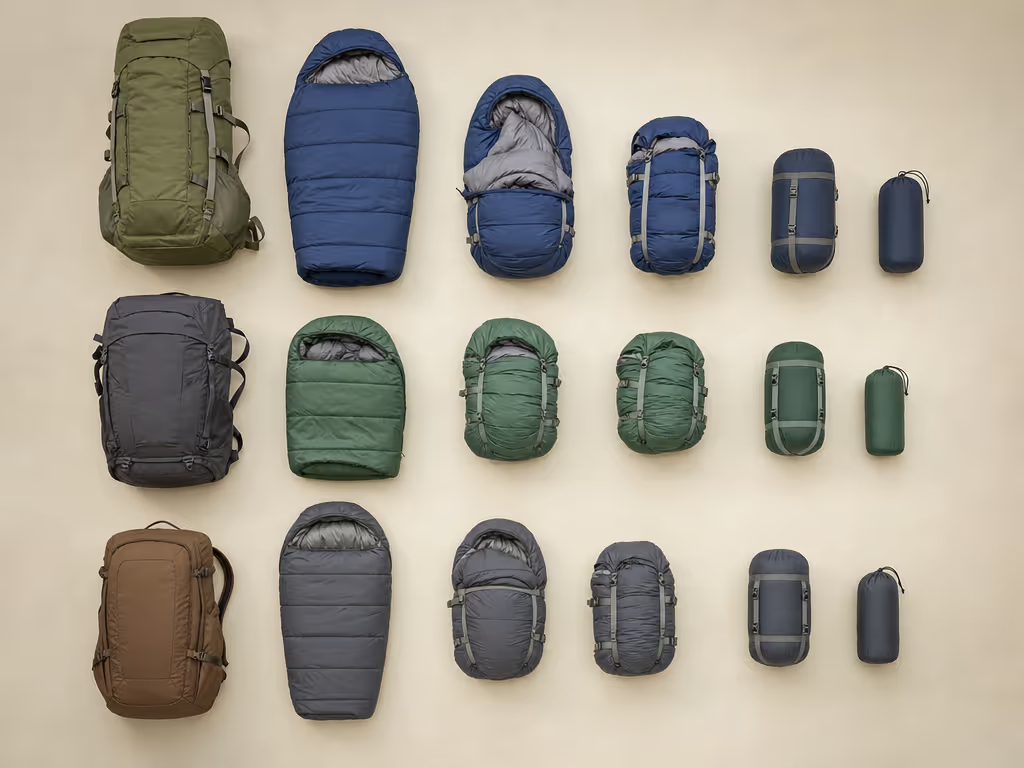
A compact sleeping bag should be judged by the space it occupies after it is packed in the sack you will actually travel with. Weight and packed volume are separate comparison fields, while warmth figures are most useful when their rating framework is clearly defined:
- Weight should be compared using bag-only measurements when available.
- Packed volume should be compared using measured stuffed volume and a stated sack.
- Warmth ratings are more comparable across brands when they use the same ISO or EN framework.
A useful contextual benchmark comes from independent testing of the Sea to Summit Spark 30: it measured 17.0 ounces for the bag alone and 4.5 liters stuffed using its included sack. Those are meaningful, concrete fields to compare, not proof that every similarly marketed ultralight bag will pack as small or weigh as little.
The broader lesson is that small lightweight sleeping bags need a number beside the marketing. If a listing does not disclose packed dimensions or stuffed volume for the exact version you are buying, do not assume it solves a space problem. Ask first.
Green flag: the seller identifies the exact size or configuration and gives packed dimensions or volume.
Red flag: one title bundles several warmth figures, colors, or variants while offering one generic "compact" promise.
2. Treat the Naturehike envelope bag as a verification-first option
The Naturehike Lightweight Compact Envelope Ultralight Backpacking Sleeping Bag is the compact travel option here that deserves a close look, but not blind confidence. Its retailer listing describes an envelope-style sleeping bag and says a compression sack is included. That shape can appeal to travelers who dislike the constriction of a tight mummy bag or want a more familiar, less specialized layout.
What the listing does not establish is equally important: there is no verified exact weight, packed volume, insulation type, fill amount, dimensions, zipper layout, standardized temperature rating, or independent durability test for this exact item. There is also no evidence to support calling it the lightest, smallest, or best-value bag.
The title includes both 59°F and 32°F, but it does not say whether those are separate variants, a comfort rating, a lower limit, or a brand-specific estimate. Do not turn those figures into a cold-weather plan.
A temperature number not stated as a comfort or lower-limit rating should be treated as a rough guideline rather than an absolutely comparable rating.
Before buying, verify these points on the exact selected option:
- Packed dimensions or volume with the included sack.
- Finished weight for that option, rather than a family-level claim.
- Whether the temperature figure is ISO/EN comfort, lower limit, or neither.
- The seller’s current return terms, especially if fit is a concern.
- Whether a replacement sack, zipper service, or other repair path exists. If that information is unavailable, factor the risk into the price.
That is not gear snobbery. It is repair-versus-replace math. A low upfront cost only remains value if the bag fits the job for more than one trip.
3. Compare warmth claims correctly before you compare ounces
For outdoor use, a bag’s rating is only comparable across brands when it is stated using the same temperature-rating framework. EN or ISO testing is useful because it creates a closer apples-to-apples comparison.
Two terms deserve attention:
- Comfort rating: the temperature at which a cold sleeper might be comfortable.
- Lower-limit rating: the temperature at which a warm sleeper might still be comfortable.
Those are not interchangeable. If you sleep cold, run low on food after a long day, or travel with a breezy shelter, shopping from a lower-limit figure alone is a familiar path to a rough night.
Lab testing also assumes a sleeping pad underneath the bag and a mannequin wearing base layers. Your experience can change with your pad, clothing, body type, weather, and other conditions. I learned that lesson on a shoulder-season desert loop: a bargain bag looked fine until a low-R pad, open sky, and a depleted calorie tank turned dawn into a long, shaking calculation.
The correction was not an exotic bag. It was rebalancing the system: pad, fit, and then a smarter used purchase where the risk was lower. Spend where failure hurts; save where consequences are low.
For travel sleeping bags lightweight enough to disappear in luggage, this system view matters even more. Compactness is useful only after your insulation and ground protection are sufficient for the conditions you expect.
4. The Sea to Summit Spark 30 shows why measured data matters
The Sea to Summit Spark 30 is not evidence about the Naturehike bag, nor is it a declaration of a universal winner. It is, however, a helpful benchmark for what a compact specification set looks like when it has independent measurements attached.
In the cited independent comparison, the Spark 30 measured 17.0 ounces and 4.5 liters packed in its included stuff sack. It also carried an ISO-verified 39°F comfort rating. The same assessment cautioned that it may not be warm enough for summer travel at high elevations.
That is the compact-bag trade-off in plain language:
- It can be very small and light.
- Its tested warmth still has limits.
- A high-elevation summer night can demand more insulation than a calendar-season label suggests.
This is why "ultralight" should describe a design target, not promise adequate warmth. Even within one manufacturer's ultralight collection, listed temperature categories can range from 10/20°F through 30/40°F. The category is broad; your planned conditions decide which end of it is relevant.
5. Choose insulation strategy based on space and your moisture exposure
When packed size is the overriding concern, insulation comparisons need to stay product-specific. In one independent comparison, down was reported to pack smaller and lighter than a tested synthetic quilt.
That does not make down an automatic answer. The right question is: what happens if this bag gets damp on the kind of trip I take? If a humid, coastal, or condensation-prone itinerary makes moisture management hard, do not buy solely on the smallest possible bundle. Make room in the decision for drying opportunities, shelter habits, and the consequences of wet insulation.
For any compact sleeping bag, take care of its insulation:
- Keep it out of pooled tent condensation and away from a wet footbox area.
- Air it out when conditions allow.
- Avoid storing it compressed between trips.
- Use the compression sack for transport, not as permanent storage.
Green flag: you know the insulation type and can match it to your trip's moisture reality.
Red flag: "waterproof" appears in a retailer title but the exact shell construction and performance details are not documented. Treat that as a claim to investigate, not a substitute for a dry sleep system.
6. Fit and pad compatibility can erase a compact bag's advantage
Fit can work well for some people and be miserable for others.
A bag is a poor fit when it forces side sleepers to press insulation flat at shoulders or hips, leaves restless sleepers fighting gaps and drafts, or clashes with the pad and pillow arrangement. None of those problems is fixed by a small stuff sack.
Before committing, check the exact product's measurements and return process using a sleeping bag size guide to avoid excess space or cold spots. Then assess your real sleep position:
- Side sleeper or broad-shouldered sleeper: prioritize sufficient internal room before chasing the lowest liter count.
- Restless sleeper: look closely at closure layout and how easily you can regulate temperature without opening a draft channel.
- Cold sleeper: give more weight to the comfort rating and pad than to a headline lower limit.
- Warm sleeper in consistently mild conditions: packability may move higher up the priority list, provided the rating is comparable and defined.
A sleeping pad is part of the standardized temperature-test setup. If your existing pad is the weak link, replacing a serviceable bag may be the wrong first expense.
7. Use this compact-bag buying checklist before checkout
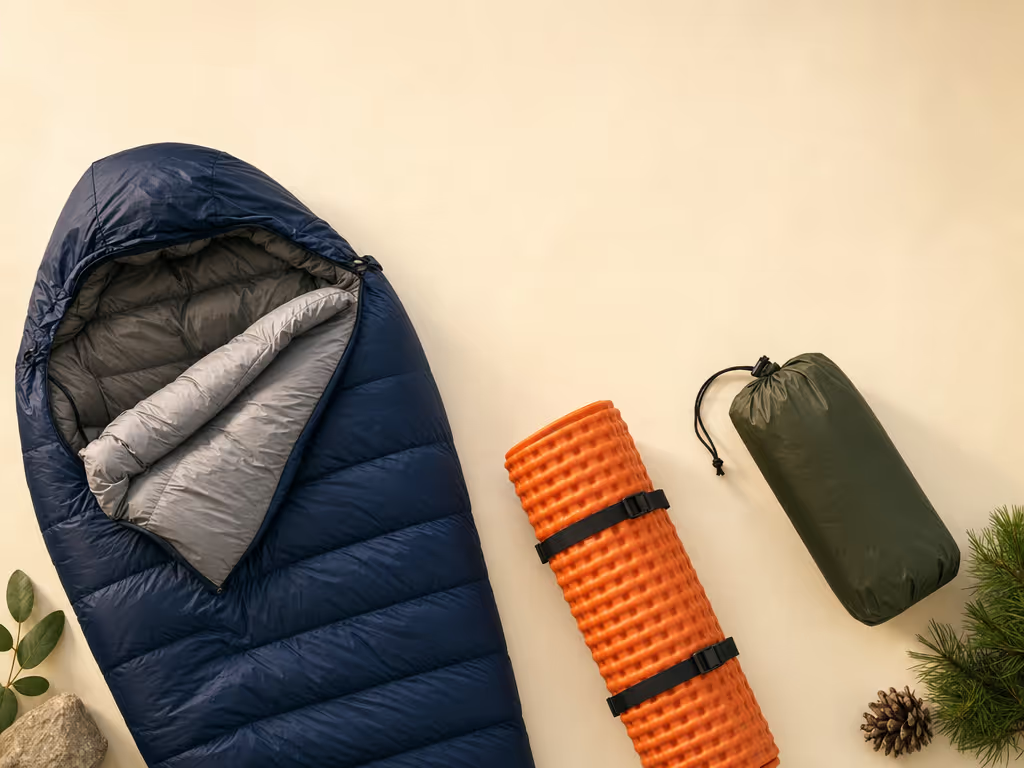
The best compact sleeping bag for you is the one that passes this checklist without evasive answers.
-
Do I have the exact packed volume or dimensions? If not, you cannot confidently judge luggage or pack fit.
-
Do I have the exact weight for my chosen version? A product family can include materially different configurations.
-
Is the warmth figure explicitly ISO/EN comfort or lower limit? If it is not, use it only as a rough manufacturer or retailer guideline.
-
Am I building around my current pad? Standardized temperature testing uses a sleeping pad beneath the bag. Do not use a bag rating to hide a weak ground setup.
-
Does the cut match how I sleep? Compact should not mean compressed insulation, shoulder bind, or draft-prone gaps.
-
What is the moisture plan? Your insulation choice and your shelter habits should make sense together.
-
Can I return, repair, or replace responsibly if the fit fails? This is where cost-per-night math gets real. A modest premium for transparent specifications and workable support can cost less than cycling through "cheap" bags.
FAQ
Is an ultralight sleeping bag worth it?
It is worth it when reduced carry weight and packed volume solve a real travel problem without compromising the warmth and fit you need. Ultralight bags span very different warmth categories, so the label is not a verdict. Compare measured weight, packed volume, and a clearly defined temperature rating as a set.
What is the lightest and smallest sleeping bag?
There is no useful universal answer. "Lightest" requires comparable bag-only weights; "smallest" requires comparable packed-volume measurements using stated sacks. A single independently tested reference point (the Spark 30 at 17.0 ounces and 4.5 liters) shows the kind of data worth seeking, not a global record.
Is 3 pounds too heavy for a backpacking sleeping bag?
Not automatically. Weight has to be weighed against warmth target, packed volume, and the rest of your sleep system. One independently tested ultralight example, the Spark 30, measured 17.0 ounces, and ultralight warmth categories vary substantially. A heavier bag that fits your expected conditions can be more reliable than a lighter one that forces you to sleep on the edge of its capability.
What does a "0" sleeping bag mean?
Do not assume a number in a product name is a standardized comfort temperature. Look for a stated ISO/EN comfort rating and lower limit. If the rating is not defined that way, treat it as a rough estimate rather than directly comparable performance data.
Final verdict: Buy verified compactness, not a compact-looking claim
For travelers trying to reclaim space, the Naturehike envelope bag is worth considering only after you confirm the exact version's packed size, weight, and meaning of its temperature figure. Its listing establishes an envelope design and included compression sack, but it does not provide enough verified information to call it the best compact sleeping bag or to plan around its 59°F/32°F wording.
The smarter buying rule is simple: prioritize measured packed volume, comparable warmth ratings, pad compatibility, and fit (in that order of risk). If a product cannot answer those basics, save your money or treat it as a low-consequence, mild-use experiment rather than your primary outdoor sleep system.
Reliable sleep is the value play. The smallest package is only a win when you can still trust what happens after you unzip it.
Related Articles