
Bivy Bag vs Sleeping Bag Cover: Staying Dry and Warm
By Rina Takahashi • 7th Oct
Quick verdict
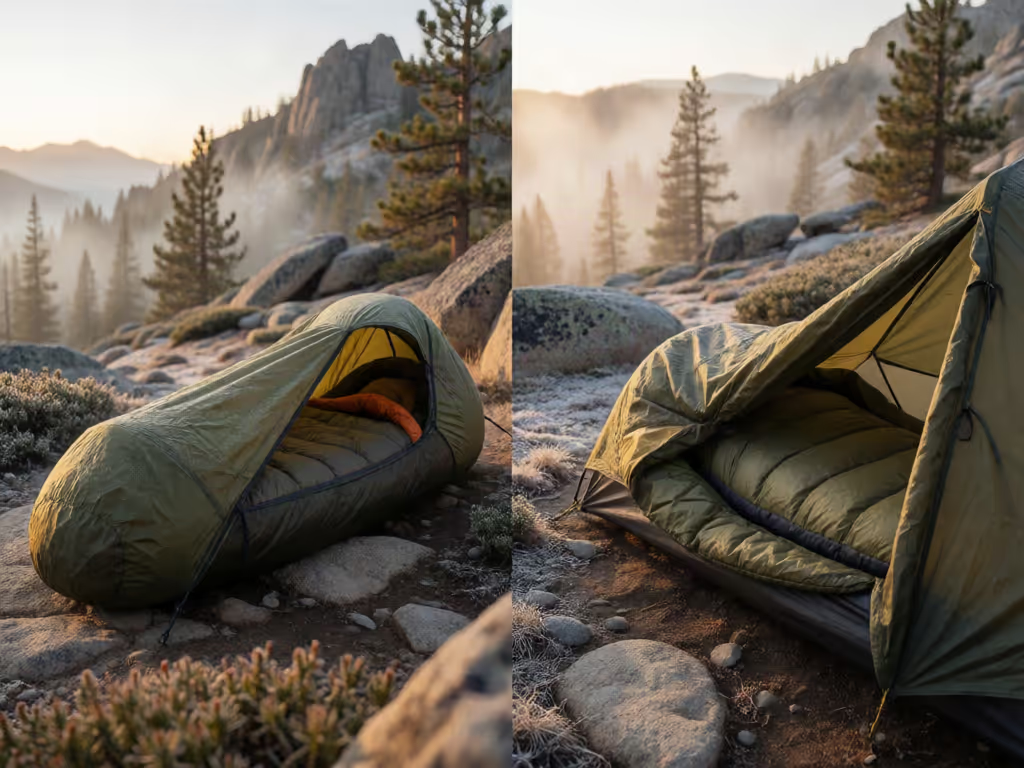
Choose a bivy bag for wind, rain-spray, spindrift, and ground protection around a sleeping bag or quilt, especially in a tarp-based system. Consider the topper approach discussed here only for a specific external frost or condensation problem in moderate cold; this is condition-specific forum guidance, not a guaranteed warmth upgrade.
- Choose a bivy bag if: Your main need is a compact, weather-resistant outer layer.
- Consider an insulated overbag if: You are addressing frost or condensation on the outside of the main bag in the specific conditions described below.
- Main trade-off: Bivies save space and add exposure protection but can reduce comfort and increase moisture-management demands. Check the exact dimensions and design rather than relying on the label.
Important: Neither option provides a reliable, category-wide warmth increase, and retail terms overlap. Treat the bivy as one part of the sleep system, not a substitute for adequate insulation or shelter.
A bivy bag and a sleeping bag cover for rain are often discussed as if they are interchangeable, and search results for sleeping bag bags make the terminology even less clear. The practical distinction is not a universal industry standard, so use this article's working definitions: a bivy bag is a thin, weather-resistant sack that goes around a sleeping bag or quilt; a sleeping bag cover is a broad retail term that may describe a similar external cover; and an insulated overbag refers here to the condition-specific topper approach used outside the main bag. What matters is not the label, but the exposure you need to manage: wind, rain-spray, ground contact, and moisture inside the system. For more context on evaluating the whole sleep system, see our guide to how sleeping bag insulation works.
Warmth is a system, not a single-spec promise.
Assumptions first, then conclusions: this comparison concerns external sleep-system covers, not a replacement for choosing an appropriate sleeping bag, pad, or shelter.
The Short Answer
Choose a bivy bag when you want a compact, weather-resistant layer around your sleep system, particularly within a tarp-based setup. A breathable bivy used with a tarp can provide wind resistance, spindrift and rain-spray protection, plus ground cover in many three-season situations.
Choose an insulated overbag only when its specific role is clear. One Backpacking Light forum administrator suggests a synthetic topper used outside the main bag for external condensation or frost accumulating on the main bag in moderate cold, roughly between freezing and 0°F. Treat that as condition-specific guidance (not a universal rule or a guaranteed temperature boost).
No fixed warmth increase is established for either option. A waterproof bivy can block outside rain while condensation, ground moisture, or wet gear still leave the sleeper damp.
What Each Term Usually Means
Bivy bag
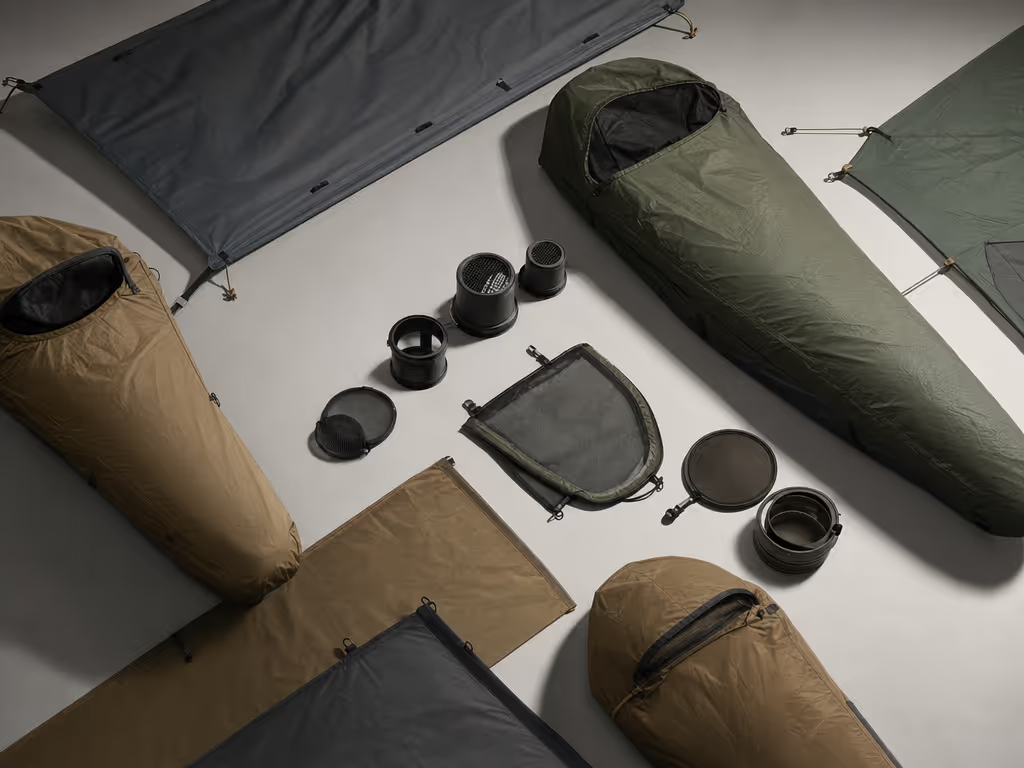
A bivy bag is generally a thin, lightweight, weatherproof sack that slides over a sleeping bag. Designs vary substantially: some are simple sack-style models, while others may have mesh vents, raised head areas, guy points, or pole-supported structures.
That variation is consequential. Do not assume that every bivy has meaningful headroom, a vent, or the same balance of weather protection and comfort.
"Sleeping bag cover"
"Sleeping bag cover" is overlapping retail language, not a precise technical category. For decision-making, examine the item rather than relying on its name:
- Is it described as a bivy-style weather shell or as an insulated outer bag?
- Does it provide a way to hold material away from your face and sleeping bag?
- Is it intended to be used beneath a tarp, or as a more standalone enclosure?
- What are its internal dimensions when used with your actual sleep setup?
This prevents a common purchase mistake: comparing two products with different jobs because both happen to be called a cover.
Insulated overbag or topper
For this article, “insulated overbag” is working language for the topper approach discussed above, rather than a formal industry category. A Backpacking Light forum administrator suggests a synthetic topper used outside the main bag when external frost or condensation is the problem in moderate cold. It is not a predictable warmth increase for every sleeper or trip.
Comparative Analysis: What Problem Are You Solving?
| Trip problem | Bivy bag / bivy-style cover | Insulated overbag |
|---|---|---|
| Wind and rain-spray in a tarp-based setup | A breathable bivy used with a tarp can add wind resistance and rain-spray protection. | Not typically its primary role. |
| Ground protection | A breathable bivy-and-tarp system can provide ground cover. | Not typically its role. |
| External frost or condensation on the main bag in moderate cold | No broad conclusion. | A Backpacking Light forum administrator suggests a synthetic topper for this specific problem. |
| Fixed added warmth | No reliable number can be assigned. | No reliable number can be assigned. |
| Wet-weather arrivals, boots, packs, and damp gear | Add tarp coverage when protected working space is needed. | Add tarp coverage when protected working space is needed. |
The table reveals the useful dividing line: a bivy is primarily an exposure-management layer; the topper approach is a specialized option whose benefit must be evaluated for the exact conditions.
Staying Dry: Exterior Weather Is Only Half the Equation
It is reasonable to expect a waterproof bivy shell to address water coming from outside. It is not reasonable to expect waterproofness to guarantee that you wake up dry inside.
Manufacturer guidance highlights a key distinction: waterproofing addresses outside water, while breathability and airflow address moisture produced inside the enclosure. For practical techniques using zippers, openings, and positioning, see our guide to venting a sleeping bag for dry sleep. Those are related but different jobs.
The condensation check
Use this compact checklist before relying on a bivy-style layer overnight:
- Can the top material stay away from the sleeping bag? Direct contact can cool the sleeper rather than warm them.
- Can you create airflow? A practical approach is to lift the top away from the bag, moving the condensation surface farther from the insulation while increasing airflow. Helpful in practice, but not a guarantee.
- Will you need protected working space? If rain means managing boots, a pack, or wet gear, a tarp gives you more than merely dry sleeping space.
- Have you allowed for a damp morning? Weather resistance and interior moisture management are separate decisions.
[humid, still night] Put more weight on ventilation and separation between the bivy material and your bag.
[windy tarp camp] A breathable bivy can contribute wind resistance and rain-spray protection, but its warmth effect cannot be reduced to a universal number.
Staying Warm: Don't Buy a Number That Does Not Exist
The temptation is to ask, "How many degrees does a bivy add?" The responsible answer is: there is no reliable category-wide number.
Results depend on the situation, the model, and individual physiological factors. For techniques that improve warmth without relying on a bivy temperature bonus, use these practical ways to stay warm in a sleeping bag. That is enough to reject a fixed bonus, especially for shoulder-season planning. Neither outcome authorizes a rating conversion.
Use a margin, not a bivy bonus
For variable conditions, treat the bivy as one component in your plan rather than the component that rescues an underbuilt one:
- Define whether your actual problem is rain-spray, wind, ground protection, or moisture accumulating on the outside of the main bag.
- Select a bivy design with enough internal room for your established sleep system; verify the listed internal dimensions rather than assuming fit.
- Plan how material will be kept off the bag in adverse conditions.
- Add tarp coverage when the trip requires sheltered gear handling or a protected place to enter and exit.
- Do not assign extra degrees of warmth unless you have personally established how that exact setup behaves.
This is deliberately conservative. There are trade-offs among comfort, low weight and pack size, and weather protection; no bivy design satisfies all three equally.
Fit and Comfort: Check the Interface, Not Just the Label
Most bivvies are cut somewhat larger than a sleeping bag and lie flat when empty, but that broad description is not a sizing chart. Check the specific cover's internal dimensions and make sure it does not compress the insulation. The same sleeping bag fit principles can provide useful background, but they do not replace checking the cover's own measurements.
Before a trip, do a home setup test:
- Put your normal bag or quilt inside the cover.
- Zip or close it as you would overnight.
- Check whether the cover compresses the insulation.
- Check whether the cover rests directly against the sleep system, especially around the torso or feet.
- Practice opening it and arranging the top for airflow.
For people comparing waterproof down sleeping bags with separate covers, this test is still useful: product names cannot replace checking internal dimensions, insulation compression, airflow, and whether the cover fabric rests on the insulation.
Final Verdict
A bivy bag is the clearer choice when your goal is a weather-resistant outer layer within a tarp-based sleep system. Its practical role is straightforward: help manage wind, rain-spray, spindrift, and ground contact. But it is not a universal warmth multiplier, and waterproof material does not eliminate condensation.
For the condition-specific topper approach described in this article, the forum guidance discussed here applies when there is a specific outer-bag moisture or frost issue in moderate cold and you understand how that configuration performs for you.
The buying rule is simple: choose the layer that addresses your actual exposure, then preserve airflow and room around the sleep system. That produces a more dependable night than any claimed temperature bonus.
FAQ
Is a bivy cover waterproof?
Some bivies are described as waterproof or weatherproof, but construction and claims vary by model. Waterproofness helps with outside water; it does not guarantee a dry interior if condensation, ground moisture, or wet gear are unmanaged. The shell's breathability also matters, so compare sleeping bag shell fabrics when assessing how moisture may move through your sleep system.
Can you sleep in just a bivy bag?
A bivy can be used as a minimal shelter in some circumstances, but it involves clear trade-offs in comfort, weather protection, and moisture management. Add tarp coverage when you need sheltered space for entry, gear, boots, or wet items, not only a dry place to sleep.
What is "bivy" short for?
"Bivy" comes from bivouac, a French term for an encampment for the night.
Related Articles