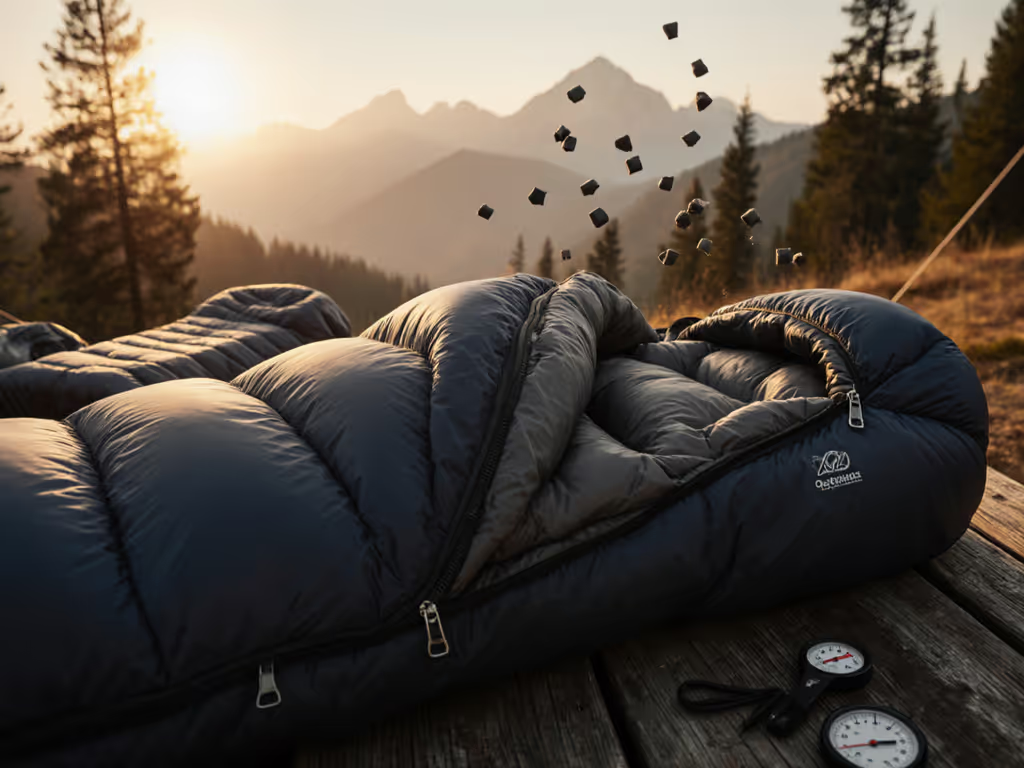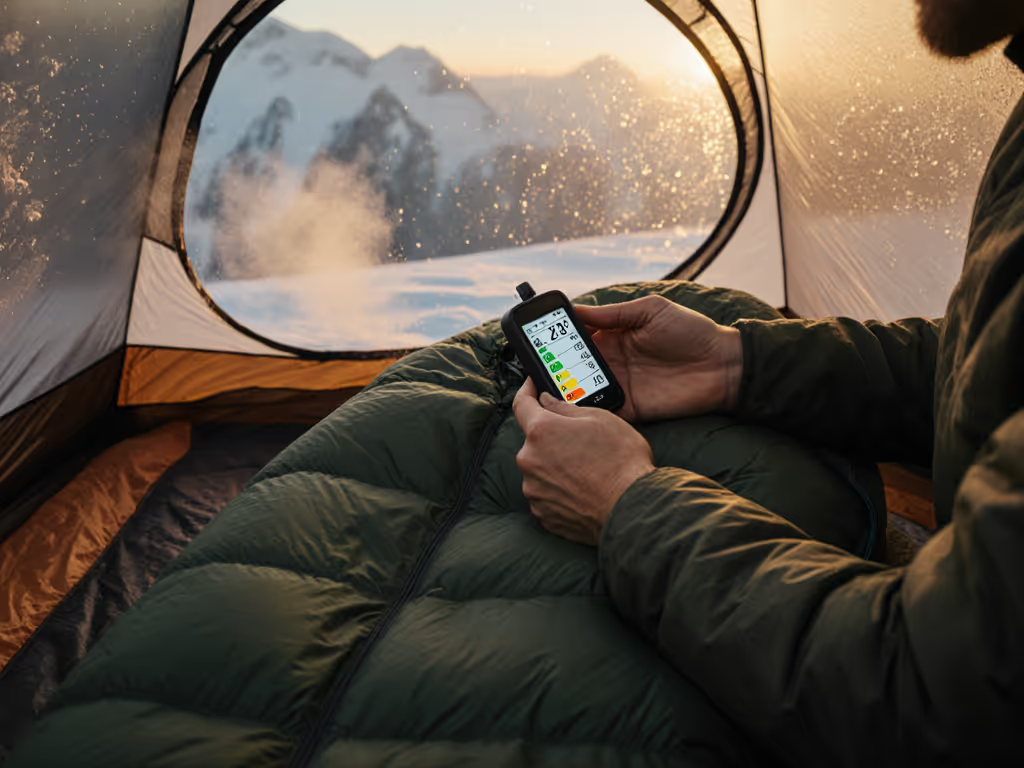
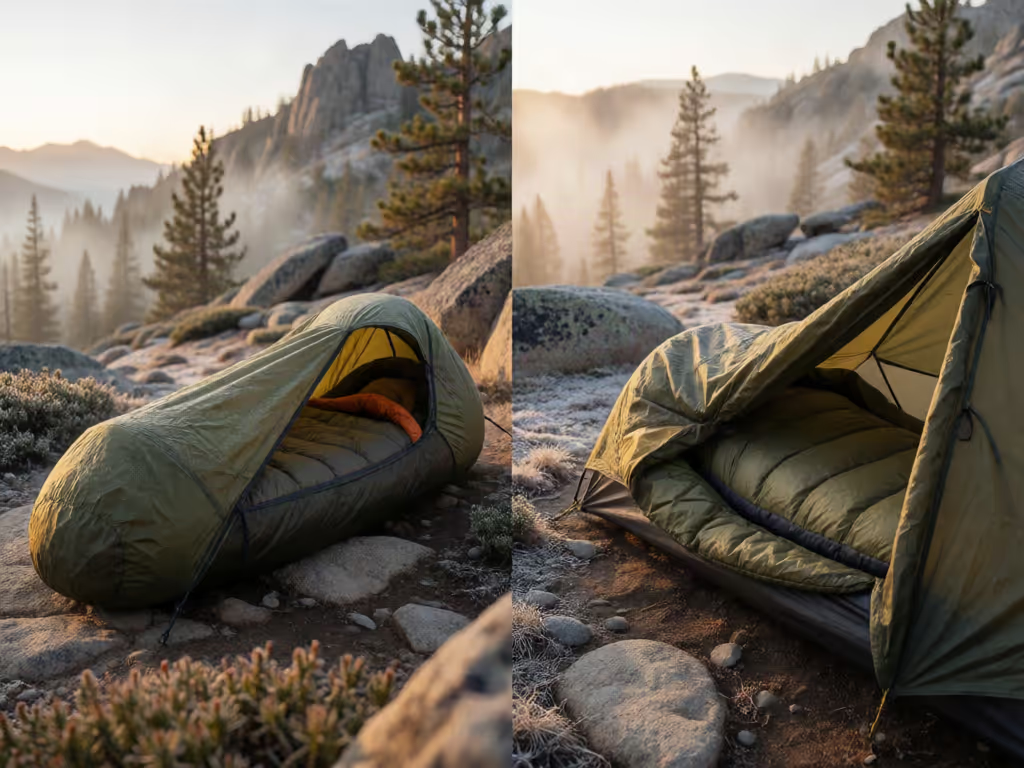
Compact Sleeping Bags for Light Sleepers: Noise and Rustle
By Anik Bose • 29th Sep

Quick answer
Compact sleeping bags have no standardized rustle rating, so denier, weave, coatings, packed size, and warmth ratings cannot reliably predict whether a bag will disturb a light sleeper.
- Key distinction: Specifications describe packability, durability, moisture management, or warmth—not proven quietness.
- Practical check: Handle the bag at your normal nighttime pace, moving the zipper, hood, and shell, then ask about returns. Treat this as a personal screening method, not a validated noise test.
Important: Evidence does not support ranking conventional sleeping bags by quietness or claiming that a particular denier, weave, or construction is inherently quieter.
Compact sleeping bags solve a real packing problem, but they do not come with a reliable quietness specification. For a light sleeper, that distinction matters: low weight, a small packed volume, and a pleasant-feeling shell can all be worthwhile, yet none is evidence of quietness.
Unfortunately, there is no collected standardized sleeping-bag rustle test, decibel label, or validated formula that converts fabric specifications into "quiet" or "loud".
That means the right approach is not to hunt for a magic textile term. For a deeper look at how to choose compact sleeping bags that stay quiet, use fabric construction and at-home handling tests together rather than relying on marketing language. It is to separate what specifications can tell you from what they cannot. Method first, model second, field test. The final word is still your sleep.
FAQ: What does "compact" actually tell you?
It tells you more about packability than nighttime noise.
A sleeping bag's shell encloses insulation. To understand how shell materials affect comfort beyond noise, see this guide to moisture-wicking sleeping bag fabrics. Its fabric choices affect weight, durability, packability, moisture management, and the insulation's ability to loft. Shell-fabric denier is one useful specification in that compactness equation:
- Lower denier indicates a thinner, lighter fabric.
- Higher denier indicates a thicker, more durable fabric.
- One publisher groups shell fabrics roughly as ultralight at 7D-15D, light at 15D-20D, moderate at 20D-30D, and heavy at 30D-40D or more.
A retailer's buying guidance also associates low-denier shells and high-fill-power down with the greatest weight savings and compressibility, usually at a premium price.
But none of that is a noise rating. Do not infer that a 10D shell is quieter than a 30D shell (or the reverse). The available evidence does not establish a denier-to-rustle rule.
Compactness is a measurable gear attribute. Quiet sleep is a personal experience.
FAQ: Do ISO or EN temperature ratings say anything about rustle?
No. Sleeping-bag warmth ratings and sleeping-bag noise are separate questions.
ISO 23537-1:2022 is described as a controlled test for determining sleeping-bag warmth. That is valuable information for thermal planning, but it does not rate fabric sound, zipper noise, or how a bag behaves against a pad and tent floor.
This is an easy place to overextend a good standard. I have watched a thermal manikin cycle through its protocol while technicians checked sensor drift and chamber stability. It is impressive work, and deliberately controlled work. It cannot answer whether the shell wakes you when you roll over.
For warmth, use the stated rating as a starting point. For noise, accept that the rating offers no evidence either way. Standards inform; translation delivers real sleep in real weather.
FAQ: Which fabric terms are worth reading, and what do they mean?
Read them to understand construction and trade-offs, not to predict silence.
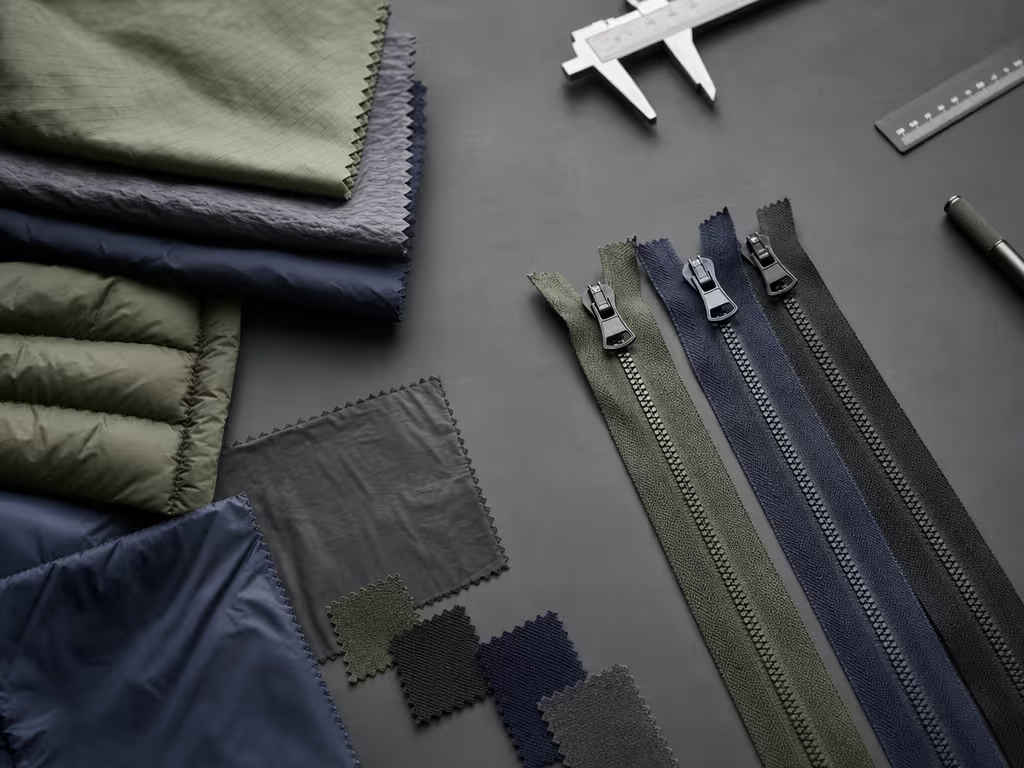
Denier
As above, denier describes yarn size. It is relevant to weight and durability, not proven quietness.
Calendaring
Calendaring runs fabric through heated, high-pressure rollers to flatten yarns and reduce gaps. In sleeping-bag shells and linings, it can help limit insulation poking through the fabric.
There is a meaningful comfort trade-off: excessive calendaring can reduce vapor transport and contribute to a clammy feel. That is worth considering for sleepers who dislike moisture buildup. It is not evidence that calendaring makes a bag quieter or louder.
Taffeta and ripstop
Nylon taffeta is a plain weave of tightly packed nylon fibers, described as having a relatively smooth hand feel. Ripstop nylon uses reinforcement threads in a grid intended to limit tear propagation. Both terms describe construction or hand feel. Neither is a rustle rating.
Coatings and membranes
A DWR treatment is generally intended to handle light condensation. Waterproof/breathable membranes are used mainly in sleeping bags intended for alpine climbing and mountaineering. Those are moisture-management choices, not established noise-reduction features.
FAQ: Are zippers and construction worth prioritizing for a light sleeper?
Yes, but for the problems they are actually documented to address.
A retailer advises that larger, sturdier zipper teeth and stiff backing along the zipper can improve operation and reduce fabric bunching. That is practical information if snags interrupt a nighttime adjustment. It does not prove reduced acoustic noise. Because zipper design can affect handling, review the different sleeping bag zipper types before making a final choice.
Likewise:
- A draft tube is an insulated chamber along the zipper designed to reduce cold drafts through that weak point.
- Baffles are the chambers that contain insulation.
These details affect warmth management, handling, and the bag's structure. No available evidence compares them for sound. Prioritize them for their known function, then assess whether their movement bothers you personally.
FAQ: How can I shop when no quietness rating exists?
Use an editorial, non-validated in-store check. It will not produce laboratory-grade comparisons, but it is more informative than guessing from denier or product copy.
- Handle the bag at the pace you actually move at night. Open and close the zipper; shift the hood; turn the bag over in your hands.
- Listen for the sound you find disruptive, not merely audible. A brief zipper sound and repeated sharp crinkling are different annoyances.
- Check the lining as well as the shell. Your ears are close to the lining and hood when you sleep.
- Pay attention to the zipper guard, hood drawcord area, and broad shell panel.
- Ask about returns before committing. A brief store check cannot reproduce a full night of restless movement.
Keep the result in proportion: this is a personal screening tool, not a proven rustle test. The evidence does not establish an at-home procedure, a sound threshold, or a ranking of quiet compact bags.
FAQ: Could another part of my setup affect perceived pad squeak?
Possibly. One user report about sleeping pads notes that perceived squeak can differ with the contact surface: a pad may behave differently on one tent-floor material than another. That is anecdotal evidence about pads, not proof about bags.
If a pad is the suspected source, consider whether its contact surface changes the sound you notice. The available evidence does not establish a broader diagnostic method for sleeping-bag noise.
FAQ: Can I compress a down sleeping bag?
A retailer states that down can continue to loft after being stuffed into a compression sack hundreds of times. That supports the basic point that stuffing for transport is part of normal use.
It does not establish how long a specific down bag can safely remain compressed in storage. No official storage-duration guidance was available here. Follow the care instructions supplied with the particular bag rather than treating a transport claim as a long-term-storage rule. For practical packing and storage guidance that helps preserve insulation performance, see this sleeping bag compression sack guide.
The practical takeaway for better sleep
For compact sleeping bags, evaluate compactness with real specifications, including packed size where supplied, weight, insulation type, and shell construction. Evaluate quietness separately, with cautious hands-on assessment.
The best "good sleeping bags" decision for a light sleeper is therefore not a universal quietest-bag claim. It is a disciplined shortlist: bags that meet your warmth and packability needs, followed by a personal check for handling noise and fit. Further exploration should focus on manufacturers that state their construction clearly and retailers that let you examine the bag before the first night makes the decision for you.
Related Articles