
Sleeping Bag Liners For Odor-Free Long Trips
By Diego Martins • 3rd Oct
At a glance
Sleeping bag liners are worth considering when the goal is to reduce dirt and grime transfer into the bag—not to guarantee an odor-free sleep system.
- Best overall: Choose a clearly described sleeping-bag liner for hygiene and sleep-layer comfort. Materials such as silk, Tencel, Coolmax, and Thermolite are options, but the evidence does not establish one as universally best for odor control.
- Best for a distinct use case: Use a liner when travel hygiene makes a next-to-skin layer useful.
- What decides it: Treat antimicrobial and odor-control wording cautiously: no collected evidence verifies odor reduction, treatment durability, or a best treated liner. A liner also has no universal temperature gain; warmth depends on the bag, pad, and conditions.
Important: A treated-article claim may concern protection of the product itself rather than protection of the user. The available information also does not establish an odor-free guarantee.
Sleeping bag liners can be a useful part of sleeping bag hygiene, but "odor-free" is the wrong promise to buy. Their better-supported job is simpler: they serve as a next-to-skin sleep layer or travel sheet and can help limit dirt and grime transfer into the sleeping bag itself.
That distinction matters when you are trying to protect an expensive bag through many nights away. A liner is not magic fabric, and an anti-bacterial camping liner label deserves careful reading. But a well-chosen liner can make the sleep system easier to manage, especially when you pair it with clean sleep clothes and air out a damp bag.
Price-to-warmth matters, but failure costs the most outdoors.
I learned that broader lesson after trying to save money in the wrong place on a shoulder-season desert loop. The early-morning shivering was not fixed by the bargain label on my bag; the weak link was the whole setup. With liners, the comparable mistake is paying extra for a sweeping odor or "antibacterial" promise instead of buying for the clear, useful role: keeping the bag cleaner.
1. Start with the job a liner can actually do
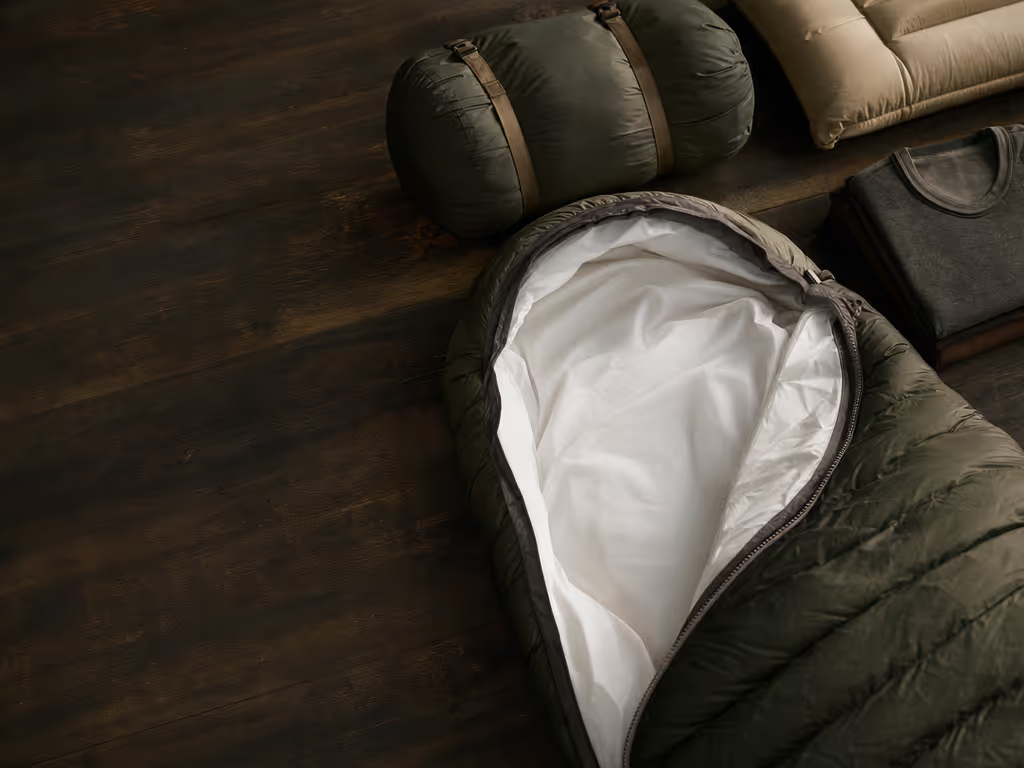
For sleeping bag hygiene, a liner belongs inside the sleeping bag, next to your skin. For a broader look at liner materials, warmth benefits, and hygiene advantages, see our sleeping bag liner guide. Sea to Summit describes its liners as next-to-skin sleep-system layers or hygienic travel sheets. They may also help keep a sleeping bag cleaner by reducing the dirt and grime that reach its interior.
That is a meaningful value proposition. A sleeping bag is a specialized insulation piece; the liner is the layer directly handling the nightly contact. If your priority is preserving the bag’s interior during repeated use, this is a sensible division of labor.
Green flag: The product is clearly described as a sleeping-bag liner or travel sleep sheet, with its material and intended use plainly stated.
Red flag: The listing leans on vague "freshness," "germ-fighting," or "odor-proof" language while saying little about what the product is, what treatment it contains, or what the claim means.
A liner does not have to be marketed as an odor-control product to have value. Buy the role you can understand: a next-to-skin layer that can help reduce grime transfer to the bag.
2. Treat "odor-free" as a maintenance goal, not a product guarantee
Available information supports liners as a cleanliness tool. It does not show that a liner will eliminate odor during a long trip, nor does it support a ranking of anti-odor or antimicrobial liner treatments.
That makes the buying decision less glamorous but more reliable. Instead of asking, "Which liner will keep me odor-free for weeks?" ask:
- Will this liner give me a designated next-to-skin layer?
- Does it suit my preferred feel and packing priorities?
- Can I understand any treatment claim well enough to decide whether it is worth paying for?
- Will I also sleep in clean clothes and air out my damp bag?
Our sleeping bag care guide places those last two practices alongside liner use: use a bag liner, sleep in clean clothes, and air out the bag when it is damp. That is a practical routine, not a miracle-fabric strategy.
For buyers who like cost-per-night math, this is the point: the liner earns its keep if it helps you keep the sleeping bag cleaner over the trips you actually take. Do not assign it a made-up odor-control score that no product documentation or independent test supports.
3. Compare liner materials by stated purpose, not invented performance rankings
Sea to Summit's liner range includes Thermolite, Coolmax, Tencel, and silk. For a more detailed comparison of warmth, moisture management, packability, and hygiene benefits, see this sleeping bag liner material comparison. Those names give you a useful starting menu, but not a verified "best liner" ranking.
There is no clear proof that one material is universally superior for odor control, durability, warmth, or long-distance use. It also does not show how those materials compare against each other. So the honest recommendation is to use material as a fit-for-purpose filter, then read the individual product description closely.
A practical material shortlist
- Silk: Consider it if you are looking at a liner category that includes silk and want to compare that fabric option with others.
- Tencel: Consider it if you want to assess a Tencel option within a liner range.
- Coolmax: Consider it as one of the listed liner-material options, then check the individual product description for its stated features.
- Thermolite: Consider it as another listed liner-material option, while resisting the temptation to convert the name into a guaranteed temperature gain.
The available evidence does not support "material X is best." Choose a genuine liner whose stated material, dimensions, construction, and use case fit your trip, then avoid paying a premium for unsubstantiated odor claims.
4. Do not buy a liner as a temperature-rating patch
A liner may be sold in a category that discusses warmth, but there is no universal number of degrees it adds. Sea to Summit specifically notes that the warmth contribution cannot generally be quantified because it depends on the bag's heat retention, the sleeping pad's insulation, and external conditions.
That is exactly why a liner should not be your emergency answer to a cold sleep system. If a trip pushes the temperature limits of your bag, focus first on the factors that govern the result: the bag, the insulating pad underneath you, and the conditions around you.
I am deliberate about this because the false economy is expensive. On that desert loop, the sticker price told me I had saved money; the cold dawn told me the system had not been balanced. Reallocating budget toward the pad and fit made the whole arrangement dependable. A liner can be part of a comfortable setup, but it is not proof that an under-insulated setup is now adequate.
Green flag: You choose a liner for hygiene and next-to-skin comfort, and treat any warmth effect as condition-dependent.
Red flag: A seller gives one temperature number as though it applies to every bag, pad, and campsite.
Spend where failure hurts; save when the feature is merely a marketing upgrade.
5. Read antimicrobial claims with regulatory-level skepticism
An anti-bacterial camping liner may sound like a cleaner, safer choice. The wording matters.
In the United States, EPA guidance explains that certain treated articles may be exempt from pesticide registration when the treatment is intended to protect the article itself. That does not mean the product protects the user from bacteria, viruses, germs, or disease organisms. EPA also says a pesticide-treated product that is not EPA-registered must not make public-health claims such as fighting germs or providing antibacterial protection.
For a shopper, the takeaway is plain language:
- A treatment claim may concern protection of the textile or product itself.
- Do not translate that claim into personal health protection.
- Do not assume it proves long-trip odor performance.
- Do not pay a premium unless the claim is specific enough for you to understand.
No collected source identifies a treated sleeping-bag liner or verifies an active treatment, odor result, wash-durability result, or independent comparison. That means no evidence-based "best antimicrobial liner" pick belongs in this guide.
This is not gear shaming. It is repair-vs-replace thinking applied before the purchase: understand what you are buying, skip vague claims, and keep your money for the parts of your sleep system where failure has real consequences.
6. Use the three-part hygiene routine rather than a single-product solution
The most defensible routine is uncomplicated:
- Use a sleeping-bag liner as the next-to-skin layer.
- Sleep in clean clothes.
- Air out the sleeping bag when it is damp.
Each item has a distinct role in the care guidance. Together, they keep the focus on repeatable habits instead of one overstated product feature.
A liner can help keep your bag cleaner by limiting dirt and grime transfer. Clean sleep clothes and airing a damp bag are likewise recommended bag-care practices. If your bag gets wet or damp on the trail, follow this guide to drying sleeping bags to prevent moisture damage. The collected guidance does not provide a numerical cleanliness improvement, an odor-free guarantee, or a fixed schedule for these steps.
That uncertainty is fine. You do not need a fabricated percentage to make a sound choice. If you want a hygienic travel sleep sheet or want to reduce the grime your bag takes on, a liner has a supported role.
7. Exclude look-alike products from your liner comparison
Not every lightweight item that sits near your sleep setup is a liner. The Friendly Swede Outdoor Mosquito Net, for example, is a polyester mesh net for a single camping bed. It is listed at 155 g, measures 220 x 120 x 100 cm, uses four ground stakes, and has no built-in floor; its final section is designed to tuck under a sleeping mat.
Those details describe a mosquito-net use case, not a sleeping-bag liner. The retailer-listed specifications provide no antimicrobial or anti-odor treatment information.
That makes it a clear red flag for this specific shopping mission: do not include a bed net in an odor-control liner shortlist simply because both products appear in camp-sleep searches. It may be relevant if insects are your problem, but it is not a solution for sleeping-bag hygiene.
8. Make the purchase decision using reliability-per-dollar
Sleeping bag liners are a good idea when you want a next-to-skin travel layer that can help keep your bag cleaner. The strongest purchase case is not "this fabric will make me odor-free." It is "this product has a defined purpose in my care routine."
Before you buy, run this final checklist:
- Purpose: Is it explicitly a sleeping-bag liner or hygienic travel sleep sheet?
- Claim discipline: Are hygiene and antimicrobial claims specific, restrained, and understandable?
- Material: Is the stated fabric one you actually want to sleep against?
- Warmth expectations: Are you avoiding universal temperature-addition promises?
- System fit: Have you addressed your bag, pad insulation, and expected conditions separately?
- Care routine: Will you use clean sleep clothes and air out the bag when damp?
- Value: Are you paying for a useful sleep-layer role rather than an unsupported "odor-free" promise?
Final Verdict
Sleeping bag liners are worth considering when your goal is to help keep the inside of your sleeping bag cleaner. Use one inside the bag as your next-to-skin layer, pair it with clean sleep clothes, and air out the bag when damp.
Do not buy on an unverified odor-control or antibacterial promise, and do not treat a liner as a dependable numerical warmth upgrade. The support is for hygiene and bag protection; the available information does not establish an odor-free guarantee or a "best antimicrobial" winner.
That is sound budget logic: buy the liner for the clear job it can do, direct more of your budget to the sleep-system components that determine whether you rest well, and avoid replacing good gear because marketing made the wrong promise sound essential.
FAQ
Do sleeping bag liners go inside or outside?
Inside. A liner is described as a next-to-skin layer in the sleep system, so it goes inside the sleeping bag.
How many degrees does a liner add to a sleeping bag?
There is no universal number. The warmth effect depends on the sleeping bag's heat retention, the insulation of the sleeping pad, and external conditions.
What is the best type of sleeping bag liner?
The available evidence does not identify a single winner among the material options discussed here. Sea to Summit lists Thermolite, Coolmax, Tencel, and silk in its liner range; use the stated material and intended purpose to narrow your choices, rather than treating any one fabric as the verified best for odor control.
Related Articles