Wearable Sleeping Bags: Selk’bag Lite Review for Mild Nights
By Anik Bose • 11th Oct
Bottom line
The Selk’bag Lite 6G is a specialized wearable sleeping bag positioned for mild nights, with a mobility-focused layout rather than verified technical packability or cold-weather specifications.
- Best for: Mild camping, road trips, beach evenings, and lounging when the adjustable hood, hand enclosures, and removable booties form a useful mobility-focused feature set. View on Amazon
- Skip it if: You need a verified weight, packed volume, fit range, waterproof rating, or evidence to make a technical cold-weather backpacking comparison.
- Main limitation: The information collected does not include a separate comfort rating or underlying test report, and it does not establish fit, packability, or wet-weather performance.
Important: A suitable sleeping pad remains part of the warmth system, and conditions near 48°F require cautious planning because comfort varies among users and campsites.
The Selk'bag Lite 6G takes a different form from a conventional sleeping bag: it is listed as wearable, with an adjustable insulated hood, elastic hand enclosures, and removable booties. In this Selk'bag Lite review, the question is not whether a wearable design is universally better. It is whether the Selk'bag Lite 6G makes sense for your mild-night sleep system, given its listed 48°F / 9°C ISO 23537 limit, its mobility-focused layout, and the conditions that make a temperature label feel warmer (or much colder) in practice.
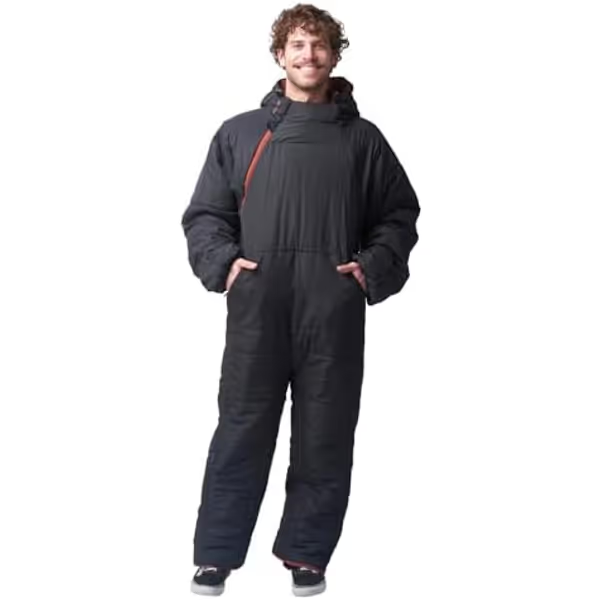
Selk'bag Lite Wearable Sleeping Bag
Wearable sleeping bag for mobile warmth and comfort indoors or out.
Temperature Rating48-55°F (9-13°C)
Temperature Rating48-55°F (9-13°C)
Pros
Stay mobile and warm anywhere.
Made from 100% recycled materials.
Machine washable for easy cleaning.
Cons
Sizing can be tricky for best fit.
Customers appreciate its warmth and comfort for various outdoor activities, though recommend checking the size chart carefully for the best fit and mobility.
Customers appreciate its warmth and comfort for various outdoor activities, though recommend checking the size chart carefully for the best fit and mobility.
The short verdict
The Selk'bag Lite 6G is best understood as a warm-weather wearable sleeping bag. The available information does not support a definitive technical comparison with cold-weather backpacking bags. Its value is the format: an adjustable insulated hood, elastic hand enclosures, and removable booties define its mobility-focused layout.
Its thermal claim requires conservative interpretation. The retailer labels 48°F / 9°C as an ISO 23537 "Limit," while also marketing a 48-55°F range. Those are not interchangeable comfort claims. The information collected for this model does not include a separate comfort rating or underlying test report, and individual comfort varies, so do not treat 48°F as a promise of relaxed, all-night comfort.
Buy it if: your trips and outdoor hangs are genuinely mild, mobility matters as much as sleeping, and you will use it for camp, road trips, beach evenings, and home lounging as well as overnight camping.
Look elsewhere if: you need a precisely specified pack weight, packed size, fit chart, waterproof performance, or evidence for a technical comparison against conventional backpacking sleeping bags. Those decision-critical details are not established by the information collected for this model.
Ratings predict; systems deliver.
Definitions first: what the Selk'bag Lite is and what its rating means
The Selk'bag Lite 6G is an adult wearable sleeping bag: insulation is arranged in a wearable format rather than a conventional tube-shaped bag. For the Lite 6G, the listed features are an adjustable insulated hood, elastic hand enclosures, removable booties, and an included stuff sack. The shell is listed as polyester, with one layer of synthetic hollow-fiber insulation.
Together, those listed features distinguish its wearable layout from a conventional sleeping-bag enclosure.
ISO 23537 "limit" is not the same as comfort
The Lite's retailer listing gives a 48°F / 9°C value labeled "Limit (ISO 23537)." In plain language, a limit figure should not be read as "every sleeper will be comfortable at this temperature." Standardized sleeping-bag ratings are useful comparative benchmarks, but they do not erase the variables that govern actual sleep:
- your metabolism and whether you sleep cold or warm;
- clothing and whether it is dry;
- wind and shelter exposure;
- humidity or condensation;
- food intake and fatigue; and
- the insulation under you.
The last item is routinely underestimated. A sleeping pad reduces heat loss to the ground; a wearable format does not change that physics. If your pad is inadequate, the extra mobility of the bag will not rescue the night.
Plain-language note: "Limit" is a boundary-style label, not a tailored prescription for a rested, comfortable sleeper. Because the information collected does not include a Lite-specific comfort rating, treat the listed 48°F as a point to plan above, not a temperature to chase exactly.
Selk'bag Lite 6G: feature-by-feature analysis
Mobility is the primary design emphasis
The Lite's hood, hand enclosures, and removable booties make the product's intent clear: this is a mobility-focused layout with adjustable head coverage and hand and foot access. One review described the Lite 6G as a mobile, weather-resistant sleeping bag and noted built-in handwarmers. That characterization is useful context for the concept, but it is not a laboratory measurement of warmth, water resistance, mobility, or durability.
For buyers drawn to a wearable format, this feature layout is the central appeal and the main reason to consider the Lite specifically.
The information collected does not include controlled assessment of overnight sleep comfort, walking performance, entry and exit, or durability. It would be overconfident to claim it works better than conventional sleeping bags for every style of camping.
The listed insulation points to mild conditions
The Lite uses one-layer synthetic hollow-fiber insulation. Synthetic insulation can be a sensible choice for a product likely to encounter camp grime, humid air, and frequent casual use, but the information collected does not include Lite-specific wet-weather or wash-durability testing. The retailer positions it for spring and summer evenings, plus camping, road trips, beach nights, and lounging. Treat those as intended uses rather than proven guarantees.
The useful conclusion is narrower: the Lite is positioned for mild weather, and the 48°F ISO limit should keep you from treating it as a shoulder-season safety margin by default.
Hood, hands, and feet are not minor details
The adjustable insulated hood provides adjustable coverage around the head. Elastic hand enclosures and removable booties complete the listed wearable feature set.
The information collected does not include a size chart, body-fit range, insulation-compression notes, or current zipper configuration. If you are between sizes, broad-shouldered, tall, or a side sleeper concerned about compressed insulation, verify the principles in this sleeping bag sizing guide along with current retailer sizing and the return terms before ordering rather than assuming a suit-like bag will fit like clothing.
Wearable versus conventional sleeping bags: choose by job, not novelty
A direct technical winner cannot be named without matched specifications and testing. Still, the formats make different promises, and that alone can clarify your purchase.
| Decision factor | Selk'bag Lite 6G wearable format | Conventional sleeping-bag format |
|---|---|---|
| Core proposition | Wearable layout with hand enclosures and removable booties | Create a dedicated sleep enclosure |
| Best-supported use case | Mild camp, travel, beach, road-trip, and lounging use as stated by the retailer | Requires model-specific information |
| Temperature information available | 48°F / 9°C ISO 23537 limit label; 48-55°F retailer marketing range | Requires model-specific information |
| Under-body insulation | Still requires attention to the sleeping pad | Still requires attention to the sleeping pad |
| Packing comparison | Stuff sack included, but no verified packed size or weight in the information collected | Cannot compare without model-specific data |
| Fit comparison | No verified body-fit range or size chart in the information collected | Cannot generalize across bags |
The practical message is simple: choose the Lite because you value the wearable experience, not because you assume it offers the best warmth-to-weight or smallest packed size. Those latter comparisons need actual measurements, and none were collected here.
Lab-to-field translation: how to plan around a 48°F limit
I have watched a thermal manikin cycle through protocol while technicians checked sensor drift and chamber stability. It is impressive work, and it is also dry, still air. The campsite adds the variables that turn a rating into a night of sound sleep or a long shiver.
A conservative mild-night framework
Use this as a decision screen rather than a universal formula:
- Start with the overnight low, not the afternoon forecast. If it is near the Lite's 48°F listed limit, you are planning at the edge of the available rating information.
- Check the ground system before changing bags. Your pad is part of the thermal system because it limits heat loss into the ground.
- Add exposure to the equation. Windy sites, damp air, and condensation-prone shelters can make the same thermometer reading feel materially less forgiving.
- Account for your body. Comfort varies among users, and a standardized value cannot diagnose individual metabolism.
- Keep layers dry and use ventilation deliberately. The goal is to avoid getting sweaty and then chilled when moisture accumulates. For additional strategies to maximize warmth from the rest of your sleep system, see this guide on how to stay warm in a sleeping bag.
Scenario guidance
Warm, settled summer camping: This is the clearest match for the retailer's spring-and-summer positioning. Use a suitable pad and dry sleep clothing as part of the overall system.
A forecast near 48°F: Treat it as a caution zone rather than an automatic green light. The available information identifies a limit figure, not a verified comfort rating. Individual comfort, exposed campsites, and marginal pads all warrant cautious planning and may call for a warmer sleep system.
Windy or damp coastal conditions: Do not infer waterproofness. A reviewer called the Lite weather-resistant, but the information collected does not include a waterproof rating, construction specification, or controlled rain test. Protect the system with appropriate shelter choices and keep expectations aligned with mild-weather use.
Backpacking where ounces and volume dominate: Pause before buying. A stuff sack is included, but the information collected does not include product weight, packed dimensions, or compressed volume. Without those figures, "lightweight" is a label, not a comparison you can put in a spreadsheet.
Care and storage: preserve loft rather than merely cleaning it
Selk'bag's brand-wide care instructions are more useful than the simplified "machine washable" claim often seen in retailer copy. For cleaning, the brand recommends spot cleaning when possible. For a full wash, it recommends a front-loading machine, gentle cycle, cool water, and a small amount of light powder detergent or a synthetic-specific cleaner. It also advises zipping the bag and turning it inside out first.
Avoid a top-loading agitator, which the brand warns can harm the bag. Air dry rather than using a normal household dryer, and avoid extended direct sun exposure.
For long-term storage, keep the bag dry, cool, ventilated, and out of the stuff sack. Store it flat, hanging, or in a larger nylon or cotton bag. Prolonged compression in the stuff sack can harm loft. If a sewn care label on your bag differs from this brand-wide guidance, follow the label. For broader washing, drying, storage, and repair advice, consult this guide to sleeping bag care.
FAQ
Are Selk bags good?
The available evidence supports a narrower answer: the Selk'bag Lite 6G has a thoughtfully mobility-centered feature set for mild conditions, and a reviewer characterized it as mobile and weather-resistant. That is not enough to issue a blanket quality verdict on every Selk'bag model or every use case. Evaluate this one on its documented 48°F limit, wearable features, and the fit and packability information not included in the collected record.
Are Selk bags waterproof?
Waterproofness is not verified by the information collected. A reviewer used the term "weather-resistant," but the collected information does not include a waterproof rating, construction detail, or rain test. Do not plan on it as rain protection.
Are you supposed to wear clothes in a sleeping bag?
Selk'bag's general care guidance recommends wearing clothing underneath to reduce body-oil and sweat buildup, and notes that clothing can add thermal performance. For a cool night, the important qualifier is that clothing should be dry; moisture management matters more than simply piling on layers.
Is there an adult sleeping bag with wearable hand and foot access?
Yes. The Selk'bag Lite 6G is listed as an adult wearable sleeping bag with elastic hand enclosures and removable booties. Verify current sizing information before purchase, as model-specific fit data was not included in the collected information.
How does the Lite differ from the Selk'bag Original?
The retailer comparison table lists the Lite at a 48°F / 9°C ISO 23537 limit and the Original at 35°F. That suggests the Original is positioned for cooler conditions. A complete comparison of weight, fit, materials, and every feature is not supported by the information collected, so use current model pages to verify those details before choosing.
Final verdict: a specialized solution for mild-weather use
The Selk'bag Lite 6G earns consideration when your priority is a wearable sleeping-bag layout for time around camp. Its adjustable insulated hood, elastic hand enclosures, removable booties, and wearable build define that mobility-centered proposition for mild nights.
The decisive limitation is thermal certainty. The documented 48°F / 9°C ISO 23537 limit is not a separately verified comfort rating in the information collected, and the product's weight, packed dimensions, detailed fit, and waterproof performance are not established there. Do not let a broad 48-55°F marketing range override that uncertainty.
Final verdict: choose the Selk'bag Lite 6G for genuinely mild trips and multi-use comfort when its mobility-centered layout is your priority. For temperatures near its listed limit, individual comfort needs, exposed camps, or technical backpacking decisions, consider a warmer margin and confirm the rest of your system, especially the pad. Standards inform; translation delivers real sleep in real weather.
Related Articles